
The GLP-1 shelf, fully verified.
Three clinical prescriptions sit at the forefront of modern metabolic health and weight management today: semaglutide (single agonist) and tirzepatide (dual GLP-1/GIP). Every formulation adheres to the same rigorous 503A/503B compounding standards, cold-chain delivery, and batch-level testing—ensuring your practice receives a consistent, high-purity medication for every patient recommendation so the primary variable in your care plan remains the therapeutic agent itself.
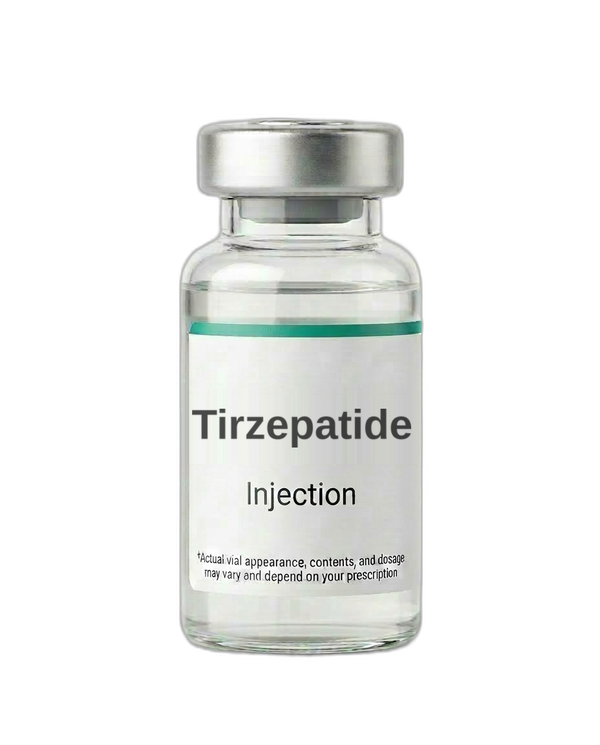
Tirzepatide 10 mg
Dual GLP-1/GIP agonist. The current workhorse, with the deepest head-to-head dataset.
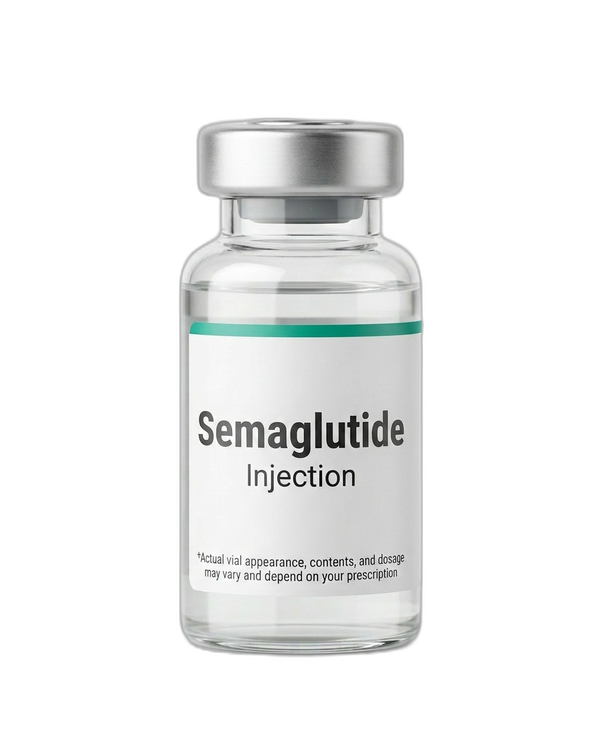
Semaglutide 5 mg
Single GLP-1 agonist. Longest human data record in the lane and the most predictable titration curve.
One receptor family, three different conversations.
If you are evaluating metabolic options for your practice, the central clinical question isn't simply which medication is "best"—it's determining how many incretin pathways your patient's care plan needs to target.
Semaglutide acts on the GLP-1 receptor. Your clinician will decide whether it's appropriate for you. Tirzepatide acts on both GLP-1 and GIP receptors. Your clinician will decide whether it's appropriate for you
Expanding receptor target coverage enhances metabolic sensitivity and clinical efficacy, requiring a structured titration schedule and proactive gastrointestinal management. Every patient care plan should follow a disciplined dose-escalation schedule supported by verified, batch-level quality controls.
Below: Explore the individual formulations, complementary patient treatments, and a clinical decision matrix to assist your practice in selecting the optimal starting care plan.
Three questions, one starting treatment.
Is this the patient's first GLP-1 care plan?
Starts at a low dose that your clinician increases gradually. Semaglutide’s 7-day half-life supports convenient once-weekly dosing, with a well-characterized gastrointestinal tolerance profile.
Pick → Semaglutide
Plateaued on single-agonist therapy?
Introducing GIP target coverage engages a second incretin pathway, helping patients break through weight loss plateaus experienced on single-agonist regimens. It is the standard clinical progression before considering higher-dose escalation.
Pick → Tirzepatide
Targeting maximum clinical weight loss?
Dual GLP-1/GIP receptor activation drives enhanced glycemic control, reduced appetite, and greater overall body recomposition. Transitioning to Tirzepatide requires a structured titration prescription to ensure optimal GI tolerance and patient adherence.
Pick → Semaglutide
Patient questions, answered.
Six things we get asked most about the GLP-1 lane. For dosing math, use the calculator. For purity records, every PDP has the full COA archive.
Can I switch between sema and tirz?
Patients in the literature do, but the half-life differences mean you need a washout calculation. Sema and tirz are roughly comparable (~5-7 d). Element MD is similar but its triple-agonism means receptor adaptation differs. We don't make clinical recommendations — see your study lead.
Do you sell oral semaglutide?
Not at this time. The oral formulation requires SNAC absorption enhancers and produces dramatically different bioavailability profiles than the subcutaneous research literature is built on.
Why is element md priced highest?
Synthesis complexity. Triple-agonism means a longer modified backbone with more protecting-group chemistry, more purification steps, and lower per-batch yield. The price reflects the synthesis, not the markup.
Can I run two GLP-1s simultaneously?
No published research supports concurrent dual-GLP-1 administration, and the receptor competition makes it unlikely to add benefit. Sequence them — full taper down on one, washout, titrate up on the next.