
The collagen shelf, properly identified.
Three molecules sit at the front of body-weight research today: semaglutide (single agonist), tirzepatide (GLP-1/GIP), and retatrutide (GLP-1/GIP/glucagon triple). Same purity bar across all three, same overnight shipping, same per-lot COA — so the only variable in your protocol is the molecule itself.
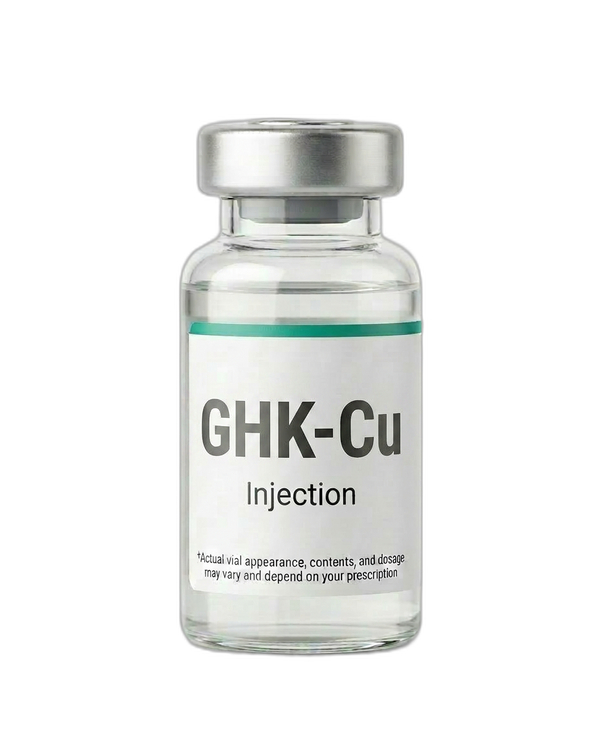
GHK-Cu 50 mg
Copper-bound tripeptide. The most-studied cosmetic peptide in the literature — collagen, follicle, wound healing.
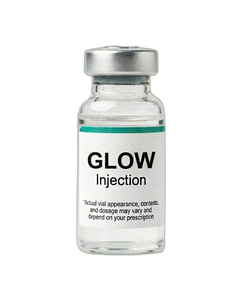
GLOW Blend
GHK-Cu plus two complementary peptides for multi-axis cosmesis research — skin, follicle, and pigmentation in one reconstitution.
Three layers of skin, two ways to reach them.
Skin research has its own protocol grammar. The dermis rebuilds collagen on a 28-day cycle, melanocytes respond to MSH analogs, and the hair follicle has its own peptide receptor architecture. None of this is the same conversation as recovery or GLP-1.
GHK-Cu is the foundational molecule. The copper coordination is what gives it its dermal activity — strip the copper and the peptide loses most of its effect in published research. It is the most well-characterized cosmetic peptide in the literature, with strong data across collagen synthesis, hair follicle stimulation, and wound-healing endpoints.
The GLOW blend extends GHK-Cu with two complementary peptides chosen for their dermal and follicular profiles. It is a compounded research formulation — useful when the protocol is studying multi-axis cosmesis (skin + hair + pigmentation) rather than collagen alone.
Below: the two products, the stacks patients run alongside, and a decision tree if you are deciding between them.
Three questions, one starting molecule.
Studying collagen specifically?
If your endpoint is dermal collagen synthesis or single-axis wound healing, the cleanest research signal is GHK-Cu alone. The literature density on this molecule is unmatched in the cosmetic peptide space.
Pick → GHK-Cu
Multi-axis cosmesis study?
If you're looking at skin and hair and pigmentation together, the compound blend reduces reconstitution overhead and lets you study interactions across the three dermal axes in one protocol.
Pick → GLOW Blend
Adding to a recovery protocol?
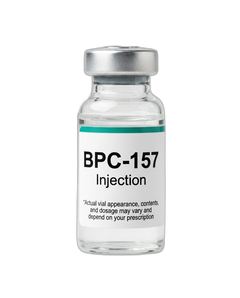
GHK-Cu pairs with BPC-157 in published research as a recovery + dermal adjunct. The KLOW stack on the Stacks page bundles them with two more for full-system regeneration.
Pick → KLOW Stack
Stacks patients run alongside.
All 9 stacks →
Patient questions, answered.
Six things we get asked most about the beauty & glow lane. For dosing math, use the calculator. For purity records, every PDP has the full COA archive.
Why does GHK-Cu need the copper?
The copper coordination is what gives the molecule its dermal activity. Stripped of the copper ion, the peptide loses most of its effect in published research. We supply the fully complexed form.
Can GHK-Cu be used topically as well as subcutaneously?
Topical GHK-Cu has its own research literature and is well-characterized. Subcutaneous administration produces different bioavailability profiles. Choose your route to match your reference research.
What's in the GLOW blend exactly?
GHK-Cu plus AHK-Cu (a hair-follicle copper tripeptide) plus a small amount of BPC-157. The exact molar ratios are on the COA for each lot.
Does the blend allow per-molecule dose tracking?
Approximately, yes — the COA gives the per-mL concentration of each component, so you can back-calculate per-injection dosing. For tighter dose control, run the molecules separately.
How long do dermal endpoints take to read out
Most published collagen endpoints read out at 6–12 weeks. Hair follicle endpoints are typically 12–16 weeks. Plan your protocol length accordingly.
What's the COA cadence on this lane?
Every lot, no exceptions. ISO-17025 third-party HPLC + mass spec, plus endotoxin, plus residual solvents. Each PDP shows the lot number you'll receive and links to the matching COA.
Build a full cosmesis protocol?
GHK-Cu and the GLOW blend pair cleanly with BPC-157 for skin + recovery research. Pre-bundled stacks on the Stacks page.